Proposed model illustrating winning experiences affect mesocorticolimbic pathways to modify METH-seeking behavior
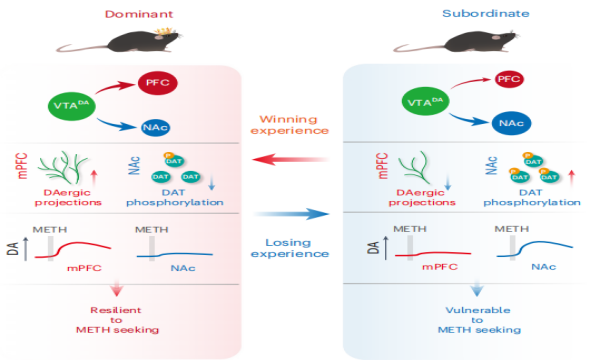
Proposed model illustrating winning experiences affect mesocorticolimbic pathways to modify METH-seeking behavior
Social status has a profound impact on mental health and propensity towards drug addiction. However, the neural mechanisms underlying the effects of social rank on drug-seeking behavior remain unclear. Here we found that dominant male rodents (based on the tube test) had denser mesocortical dopaminergic projections and were more resistant to methamphetamine (METH)-seeking, whereas subordinates had heightened dopaminergic function in the mesolimbic pathway and were more vulnerable to METH seeking. Optogenetic activationof the mesocortical dopaminergic pathway promoted winning and suppressed METH seeking in subordinates, whereas lesions of the mesocortical pathway increased METH seeking in dominants. Elevation of social rank with forced win training in subordinates led to remodeling of the dopaminergic system and prevented METH-seeking behavior. In females, however, both ranks were susceptible to METH seeking, with mesocorticolimbic pathways comparable to those in subordinate males. These results provide a framework for understanding the neural basis of the impact of social status on drug-seeking.